7 Mysterious Signs Your Cat Knows Something You Don’t
Cats have always had a reputation for being mysterious, and honestly, they earn it every single day.
From staring at blank walls to acting strange before a storm, your cat’s behavior often feels like it’s tuned into a frequency you just can’t hear. Your cat might not be magical, but their senses are so sharp that they genuinely pick up on things you completely miss.
Scientists have looked into many of these quirky behaviors with some fascinating explanations.
Your Cat Stares at “Nothing” But Actually Sees Everything

Ever catch your cat locked in a stare-down with a perfectly empty corner? Before you chalk it up to weirdness, consider this: cats can see in light conditions that would leave you blind.
Their eyes have about six to seven times more rod cells than human eyes, plus a reflective layer called the tapetum lucidum that bounces light back through the retina. That means tiny shadows, flickering reflections, or a moth barely visible near the ceiling are all crystal clear to them.
Cats also hear frequencies that go way beyond the human range. Insects moving inside walls, high-pitched electronic hums, and ultrasonic squeaks from rodents are all sounds your cat registers without blinking.
So when your cat suddenly snaps its head toward the bookshelf, something real is probably happening in there.
Their whiskers add another layer to this. These aren’t just cute facial features.
Whiskers are packed with nerve endings that detect the tiniest changes in air movement, like a breeze from a cracked window or a bug flying nearby. Your cat is essentially running a full sensory scan of the room at all times, catching details that fly completely under your radar.
Predicting Storms Before the Sky Even Changes
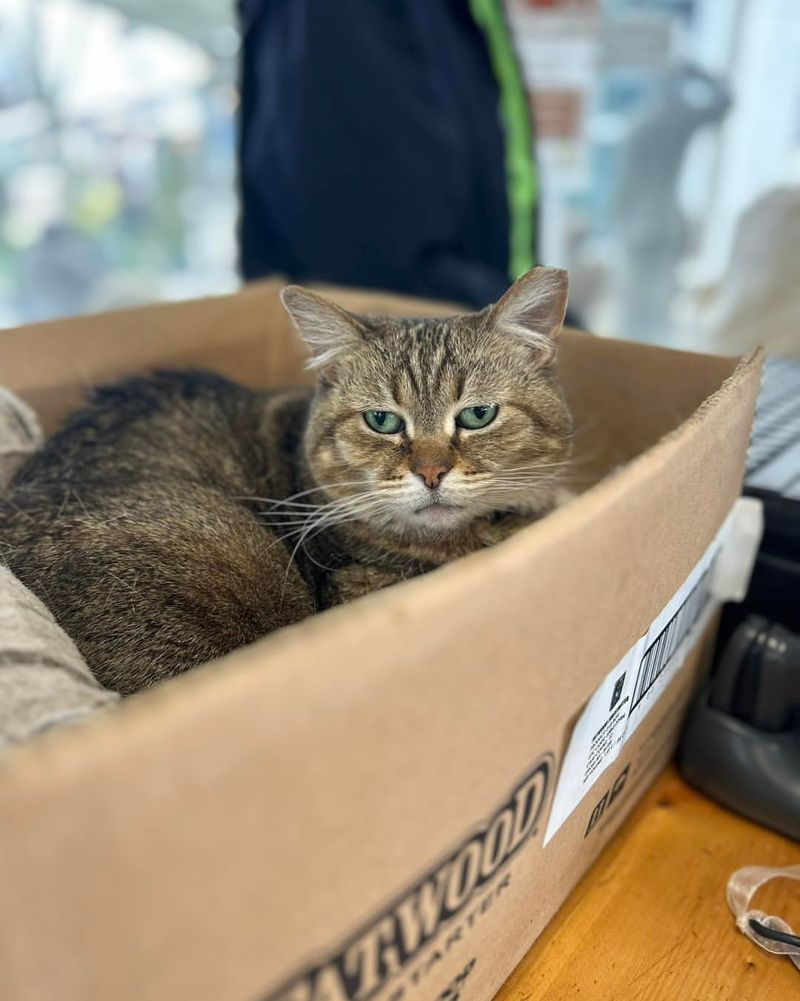
Many cat owners swear their pets start acting differently before a thunderstorm arrives, and scientists think there may be a good reason for it.
Cats are incredibly sensitive to changes in their environment, and researchers suspect they may notice subtle shifts in humidity, temperature, air pressure, or even distant sounds associated with approaching storms before humans do.
Exactly how cats sense these changes isn’t fully understood yet, but their sharp hearing and heightened sensitivity to their surroundings could help explain why some seem uneasy long before the weather takes a turn.
You might notice your cat hiding under furniture, grooming more than usual, acting restless, or becoming unusually clingy. While these behaviors can happen for many reasons, some owners report seeing them more often when a storm is on the way.
Their whiskers may play a role as well. Whiskers are highly sensitive sensory tools that help cats detect changes in their environment.
Ancient sailors reportedly used to watch cats aboard ships for signs of incoming bad weather, and there’s actually historical reasoning behind that practice. If your cat suddenly bolts under the bed on a sunny afternoon, maybe peek at the weather app.
Picking Up On Your Illness Before You Even Feel It

Cats have a very strong sense of smell compared to humans, and they use it constantly to interpret the world around them. While there’s no solid scientific evidence that cats can reliably detect specific illnesses in humans, they are extremely good at noticing changes in scent, behavior, and routine.
When a person is unwell, conditions like infections or chronic illnesses can sometimes cause subtle changes in body odor, sweat, breath, or general behavior. It’s possible that some cats notice these shifts.
There are many stories from pet owners who say their cats acted differently, such as staying close, sniffing more, or focusing attention on certain areas of the body, before a medical issue was discovered.
What is well established is that cats are highly observant of their owners. They quickly pick up on changes in daily routines, movement, energy levels, and body language. If you’re feeling unwell or behaving differently, your cat is very likely to notice and may respond by staying closer or acting more attentive.
So when a cat seems extra clingy or unusually focused on you, it might know more about how you’re feeling than you’ve admitted to yourself yet.
Reacting to Earthquakes Before the Ground Even Shakes
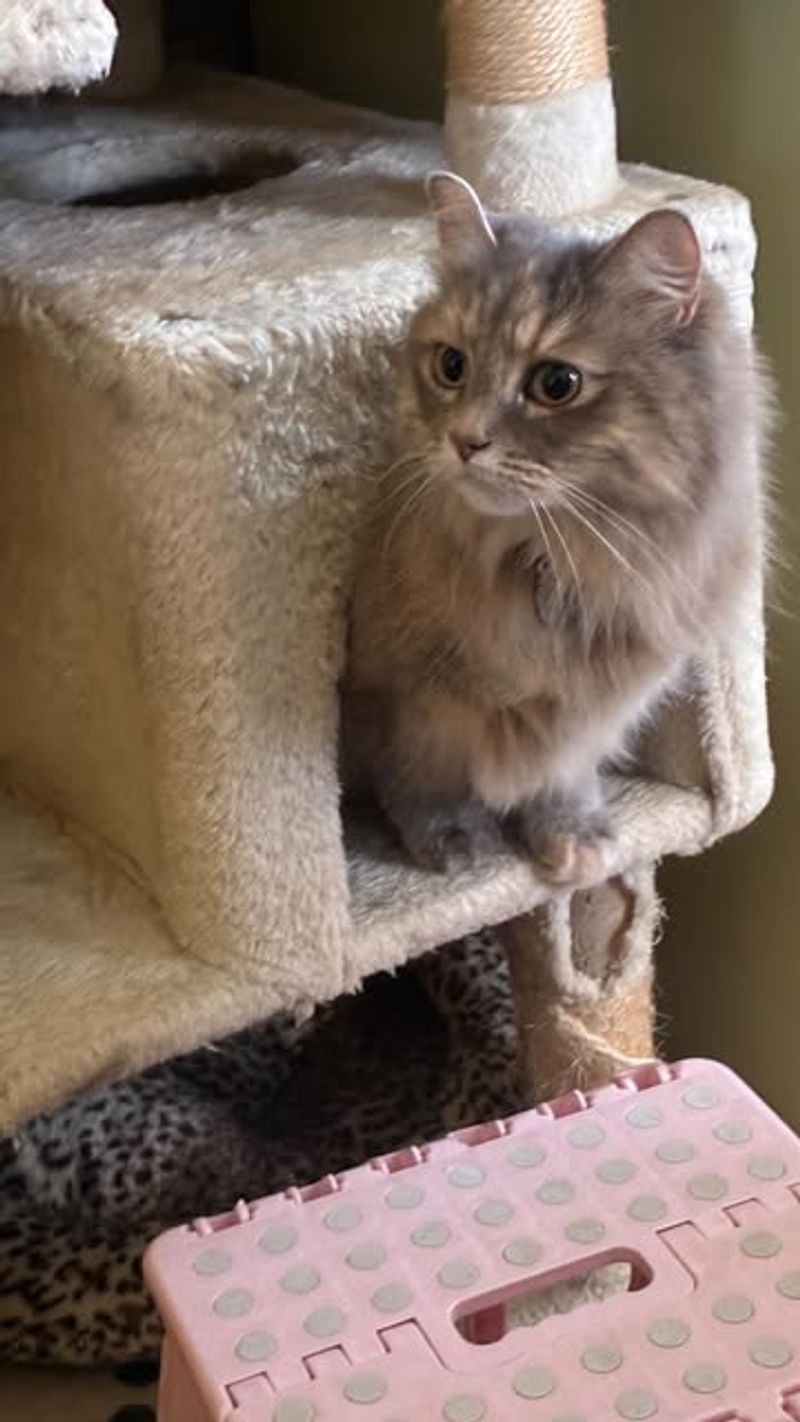
There are countless accounts of cats behaving strangely in the minutes or hours before an earthquake strikes. Hiding, vocalizing loudly, running in circles, or simply refusing to settle are all behaviors that people have reported observing before seismic events.
While scientists haven’t nailed down a rock-solid explanation yet, the leading theories are pretty compelling.
One idea is that cats can detect P-waves, which are the faster primary seismic waves that travel through the ground before the more intense shaking arrives. These waves are subtle and happen so quickly that humans feel nothing, but a cat’s exceptional sensitivity to vibration might register them clearly.
Another theory involves low-frequency electromagnetic disturbances that some researchers believe occur before fault lines shift.
Cats also have a much broader hearing range than humans, which means they may pick up on underground sounds or vibrations that travel through the earth before any movement becomes obvious. Japan, a country with frequent seismic activity, has an ongoing research interest in how animals behave before quakes.
While no reliable early warning system based on cat behavior has been developed yet, the patterns are hard to ignore. If your cat suddenly acts like something is very wrong on a calm evening, it might be worth paying attention.
Reading Your Emotions Without a Single Word
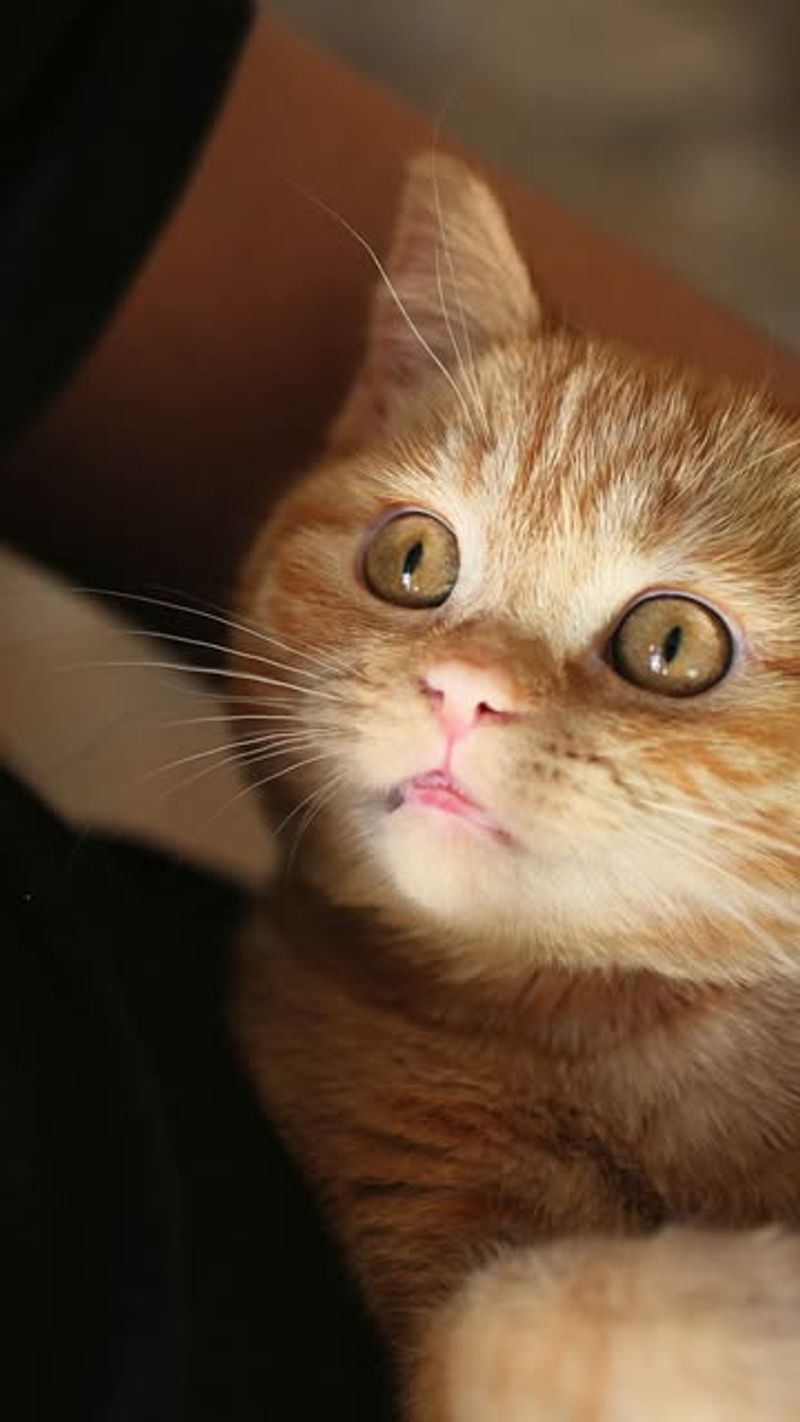
Cats are far more emotionally perceptive than most people give them credit for. Research has shown that cats can tell the difference between a happy face and an angry one, and they respond differently depending on what they see.
They track your facial expressions, your posture, the tone of your voice, and even the speed at which you move around the house. All of these cues together paint a very detailed emotional picture for your cat.
When you’re stressed, your body actually releases different pheromones and hormones, including cortisol. Cats can detect these chemical shifts through their powerful sense of smell, which means your internal emotional state isn’t exactly a secret to them.
Some cats respond to a stressed owner by becoming clingy and affectionate, while others give space, almost like they’re reading what you need in the moment.
The bond between a cat and their owner makes this even stronger over time. A cat who has lived with you for years has essentially memorized your emotional baseline.
Any deviation from your normal patterns, whether it’s crying quietly, eating less, or staying in bed longer, gets noticed fast. Your cat might not understand why you’re upset, but they absolutely know that something has shifted, and many of them will show up to sit with you anyway.
Acting Strangely Around Certain People for No Obvious Reason

Most cat owners have experienced this at least once. A perfectly friendly cat suddenly becomes distant, hissy, or flat-out disappears the moment a specific person walks through the door.
Meanwhile, that same cat might immediately curl up on a total stranger’s lap. It can feel random, but there’s actually a lot going on beneath the surface.
Cats are incredibly sensitive to body language, microexpressions, and the pheromones that humans release based on their emotional state. Someone who is nervous, aggressive, or carrying stress into a room gives off chemical and physical signals that cats detect immediately.
Even if that person is putting on a perfectly calm face, their body chemistry tells a different story, and cats read that story with ease.
Some researchers believe cats also remember past interactions on a deep sensory level. A person who once startled or upset a cat may carry subtle behavioral or scent cues that the cat associates with discomfort, even years later.
Your cat isn’t being dramatic when it hides from your perfectly polite coworker. It might be picking up on something genuinely worth noticing.
Sensing Changes in Your Daily Routine Before They Happen
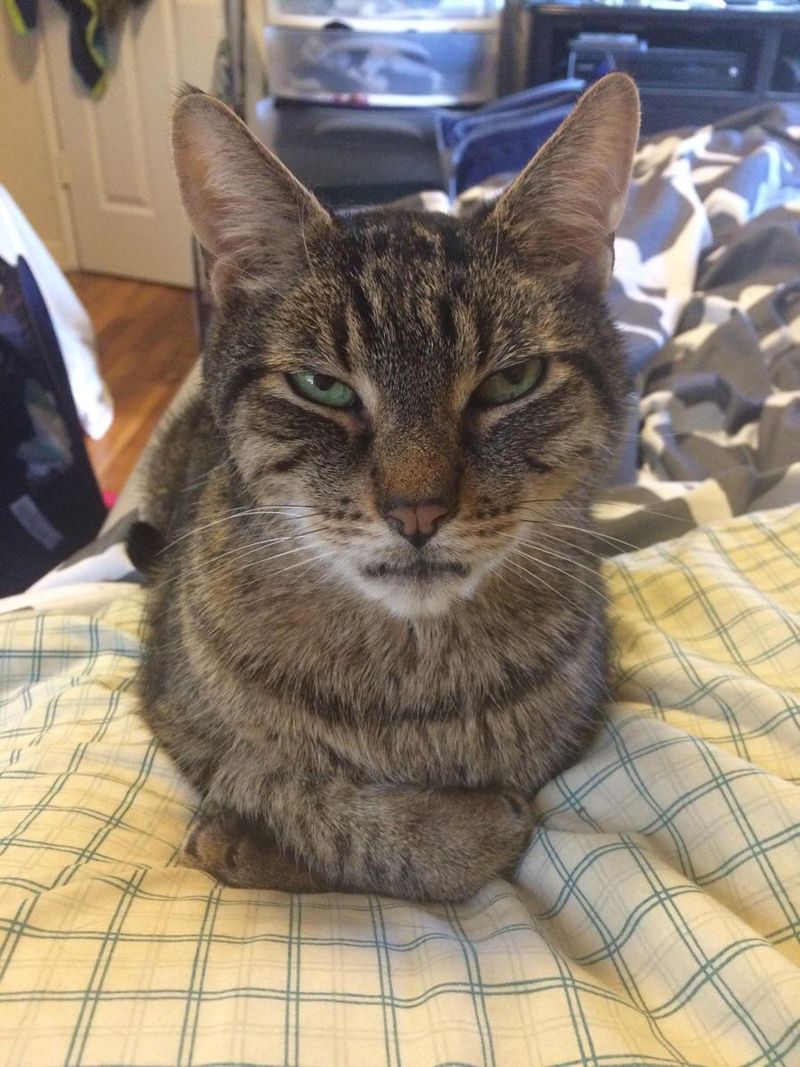
Plenty of cat owners have noticed their pet waiting by the door minutes before they arrive home, even when the schedule varies. This isn’t coincidence, and it isn’t magic.
Cats are masterful pattern readers who track the rhythms of daily life with impressive accuracy. They learn the sounds of your car, the timing of your footsteps in the hallway, and even the subtle vibrations that happen when you’re nearby.
Beyond physical cues, cats also track time through something called circadian rhythm sensitivity. They are highly attuned to light changes, temperature shifts, and even the sounds of a neighborhood at certain hours of the day.
When your usual arrival time approaches, all of these environmental signals line up in a way your cat recognizes. Their internal clock is surprisingly precise.
What makes this even more interesting is how cats respond when routines break down. If you’re going through a major life change, traveling more, or shifting your schedule, cats often show signs of stress or confusion before you’ve even fully processed the change yourself.
They pick up on your pre-departure behaviors, like packing a bag or wearing shoes at unusual times, and connect those actions to what comes next. Your cat has been quietly studying your habits since the day it moved in, building a detailed map of your world.